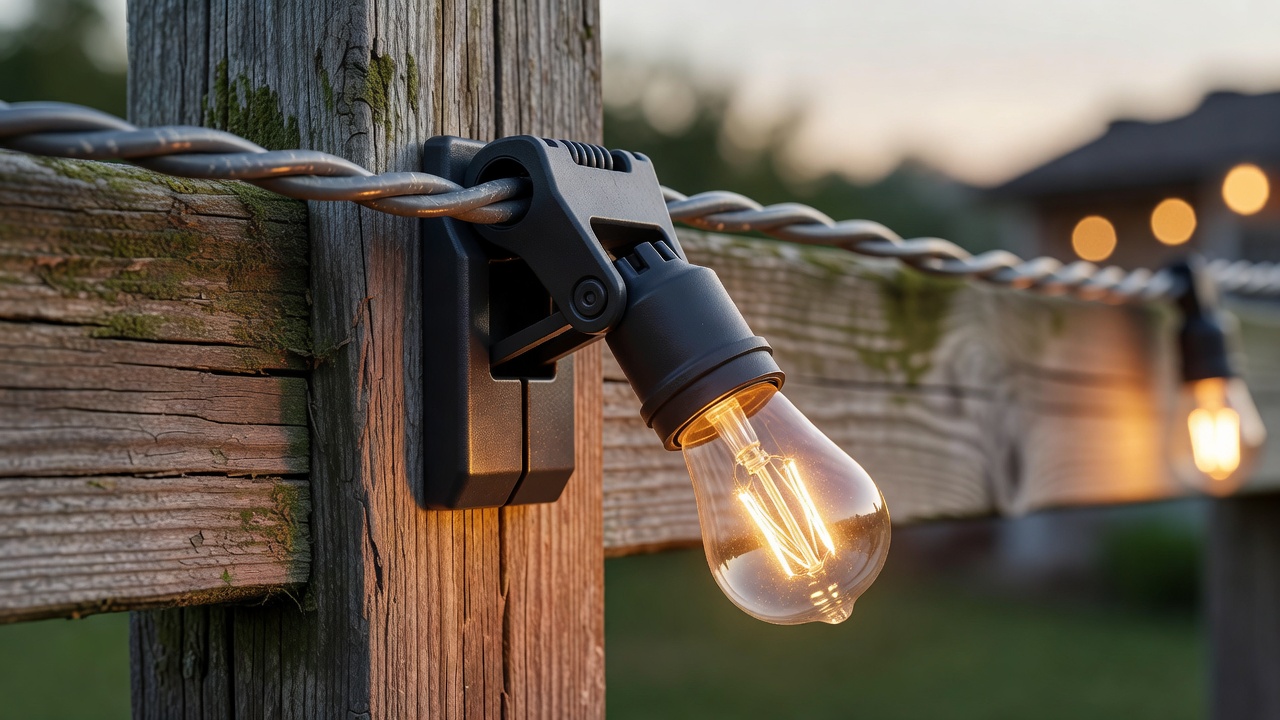
The light, fastening, connection and supply must each be suitable for their actual conditions.
Separate useful light from decorative light
Begin with the routes people need: arrival, toilets, seating, drinking water, exits and changes of level. These need dependable illumination that stays available when the music stops. A string of decorative lamps may look bright in a photograph while leaving the ground hard to read. Walk the actual routes at dusk before deciding that the lighting is sufficient.
Build atmosphere around that functional layer. Warm decorative lights can define a seating area; a modest, securely mounted mirrorball effect can mark the dancing zone. Avoid glare towards guests, neighbouring homes and roads. Ask about light sensitivity and avoid strobes or rapid flashing effects. Give guests a quieter, steadily lit area without making them leave the social space entirely.
Check the whole electrical arrangement
“Outdoor” on a product label does not describe every connection in a temporary installation. Check the manufacturer’s limits for moisture, temperature, mounting and power. IEC 60529 defines IP enclosure ratings, but an IP code is not a universal weatherproof guarantee. A connector, controller or power supply can have different restrictions from the lamp it feeds.
Have a competent person plan and check mains-powered temporary systems. Residual-current protection is an important safeguard where required, not permission to ignore damaged cables or unsuitable equipment. BS 7909 and Health and Safety Executive guidance are relevant reference points for UK entertainment electrical arrangements. Do not improvise protective housings from bags or operate equipment under a loose cover that compromises ventilation.
Use only venue-approved cable routes and suitable cable protection. Keep supports stable and within their specified loading. Do not attach lights to trees without permission or tension a decorative string where it becomes a head-height obstacle. Battery equipment reduces some cable needs, but its charging, mounting and weather limitations still matter.
Agree the sound boundary before the playlist
Confirm music permission, any sound limits and the finish time with the venue or relevant authority. Aim speakers towards the intended audience and away from nearby homes where practicable. More volume is not a reliable cure for poor placement. Keep loudspeakers stable, preserve circulation space and test from the picnic seats as well as the dance area.
Walk the boundary during the sound check and again when guests arrive. Bass can remain noticeable beyond the party even when conversation nearby seems comfortable. Assign one person to receive concerns and reduce levels promptly. Hearing protection, lower overall levels and opportunities to move away from speakers are more useful than assuming a short event cannot affect hearing. The World Health Organization’s safe-listening work provides background, not a site-specific operating approval.
Write a playlist structure, not just a song pile
Plan around the activities already scheduled. Use familiar tracks as invitations rather than keeping every selection at maximum energy. Diana Ross, Chic, Sister Sledge, Earth, Wind & Fire and Donna Summer offer useful reference points for a disco-led selection, but the right balance depends on your guests. Ask for preferences and check lyrical content when children will attend.
- Arrival. Welcoming, lower-intensity selections with space for greetings and orientation.
- Picnic. A consistent groove at a level that supports conversation and announcements.
- Dance. Recognisable invitations, gradual changes in energy and a few deliberate recovery tracks.
- Close. A clear final sequence, a stated last track and continued route lighting for departures.
Keep the running order in a plain-text note, including who can make changes and what to play if a cue is missed. Prepare legally available playback and a backup within the relevant service or purchase terms. An offline file or personal subscription does not automatically grant public-performance rights. In the UK, PPL PRS can help explain TheMusicLicence; obligations vary with the event and jurisdiction.
Rehearse the end as well as the opening
Test playback, device power and the handover between hosts before guests arrive. Disable interruptions where appropriate and keep the control device accessible to the responsible person. Avoid relying on mobile reception for the essential running order. Have a simple announcement plan if the system stops or the weather decision changes.
At the finish, lower the atmosphere layer without removing the practical lighting. Keep departures and pack-down visible. Isolate equipment in the sequence agreed with the competent installer and do not rush to disconnect wet equipment. If conditions move outside operating limits, stop the affected setup; the last song is never more important than a safe change of plan.