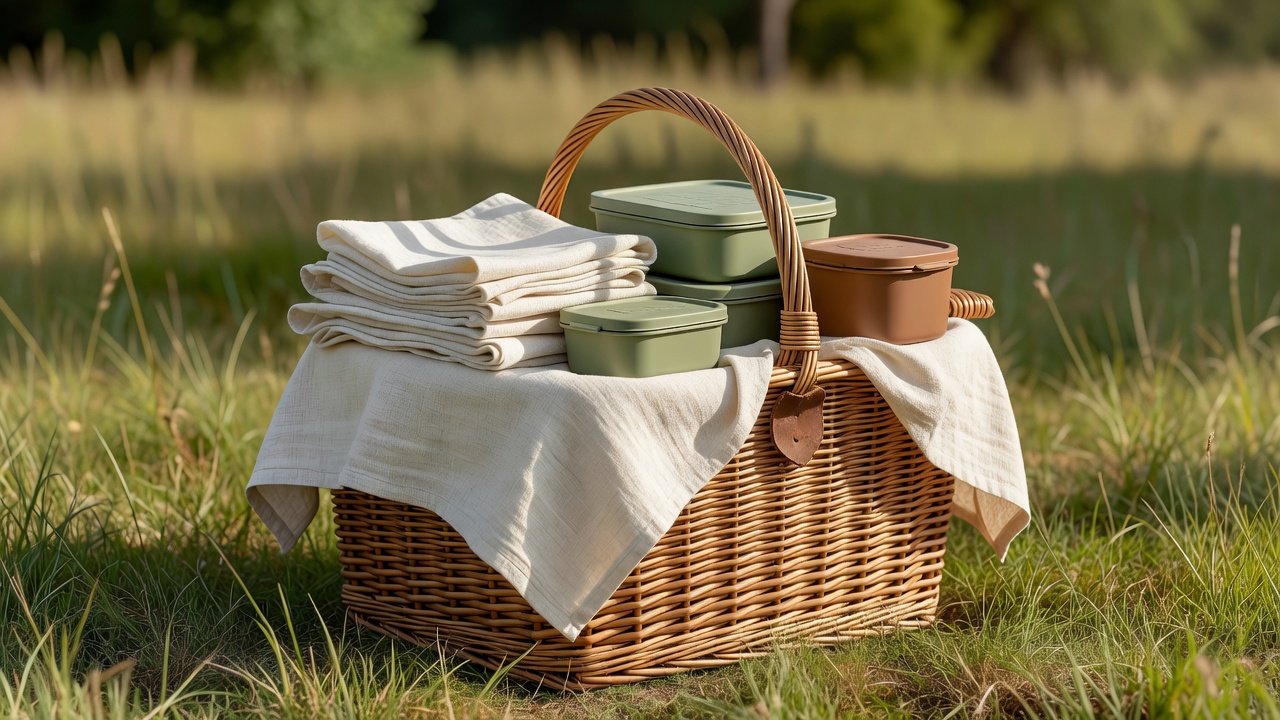
Build the look around items that already have a job: containers, cloths, signs and seating.
Choose a theme with a practical rule
Start with the confirmed site layout and guest needs. Then choose one simple visual rule that can survive transport, a breeze and low light. A crimson cloth with silver menu cards can suggest a disco supper without scattering reflective confetti across the ground. A record-sleeve-inspired menu can carry the music reference without putting fragile records near food or walking routes.
Three useful approaches are a sunset supper with warm reusable table pieces, a garden listening picnic with clearly labelled baskets, and a restrained mirrorball theme using securely mounted decorations. Each can work with the same safe serving arrangement. Keep theme materials away from hot equipment, food preparation and exits. Check the venue’s rules before attaching anything to trees, fences or existing structures.
Design the menu around the cold chain
Decide how food will be transported, kept at appropriate temperatures and served before choosing recipes. Food Standards Agency guidance is a useful starting point in the UK; the US Food and Drug Administration offers separate guidance for American hosts. Follow the requirements that apply where the event takes place. A cool-feeling container is not proof that perishable food has remained safely chilled.
Choose dishes that can be portioned and handled with dedicated utensils. Keep raw ingredients separate from ready-to-eat food, and use a practical temperature-checking method where needed. Bring out smaller quantities and replenish from suitable storage instead of presenting everything at once. If the site cannot support the menu safely, simplify the menu rather than relying on shade as refrigeration.
Ask about allergies and dietary needs directly. Keep packaging or ingredient information available, label dishes accurately and avoid promising that a shared picnic is allergen-free. Separate utensils reduce some cross-contact risks but do not erase the handling history of a dish. If a guest needs tighter controls, discuss an arrangement they are comfortable with before the event.
Give every guest a usable place
Blankets create atmosphere, but they are not suitable seating for everyone. Include stable chairs with supportive backs and access to an appropriate table surface. Check that chairs do not sink into soft ground and that people can reach them without stepping over bags. Ask about specific requirements rather than treating a token chair as a complete access plan.
Place drinks where refilling will not interrupt the food queue. Provide drinking water throughout the gathering, not only at the meal. Keep the dance-floor approach clear, and locate used dishes away from clean serving equipment. If children are attending, agree supervision responsibilities with adults; a decorative boundary or picnic rug is not a supervision system.
Pack in the order you will use things
Group equipment by task: setup, food service, guest comfort and clearing. Put route signs, cleaning supplies and the first-use table cloth near the top. Keep food containers accessible without unpacking decorative pieces onto the ground. Label coolers by contents and assign one person to manage replenishment so they are not repeatedly opened without a reason.
Give packing responsibility to named people. “Someone will bring water” is not a plan, and duplicate decorations do not compensate for missing hand-cleaning supplies. Include a container for used utensils and a way to transport waste if on-site bins are unavailable. Check any recycling rules locally; mixed food residue can make apparently recyclable items unsuitable for the available collection.
Open the task-based packing list
Plan the change from meal to music
Keep the picnic area usable when dancing begins. Guests may need a quiet seat, another drink or an early departure. Do not move every chair onto an exit route to create a larger dance area. Clear food that should no longer be served, close storage containers and deal with spills before reducing the ambient light.
Use a small number of repeated details to connect the two phases: the same menu typography on a playlist card, the same cloth colour at the water station, or the same permitted lantern style around seating. Avoid glitter, loose confetti, balloon releases and unnecessary disposable props. A coherent theme is one that remains manageable during pack-down and leaves the site as agreed with the landowner.